Inchcrow

Seventeen-year-old Nick Cho can’t even kill himself properly.
He knows it’s only a matter of time before his inability to control his explosive supernatural powers accidentally kills someone, so he figured he’d do the world a favor and take himself out first. But as if they weren’t already enough trouble, his powers interfered with his suicide attempt and saved his life.
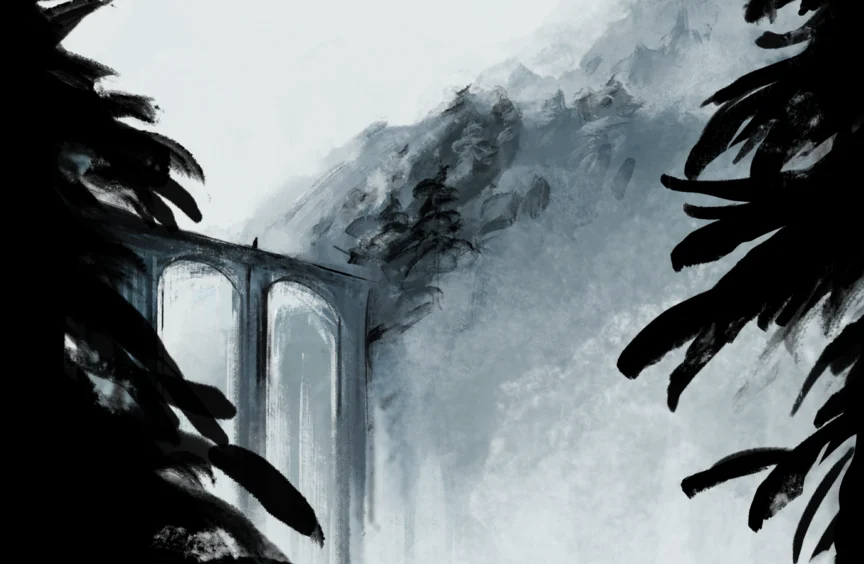
Nick and his parents have just moved to a small town in North Carolina. He is still reeling from his suicide attempt when he meets someone else with powers for the first time in his life: Wicket Chase, fellow high school senior and a notorious delinquent who everyone else in their class is afraid of. Wicket recruits Nick into his quest to find Inchcrow, a ghost who supposedly haunts the woods around the town and who Wicket believes can help them learn to control their powers. Nick’s not sure he believes in ghosts, but as his feelings for Wicket intensify into a crush, he begins to feel as though he’s being followed by something sinister . . .
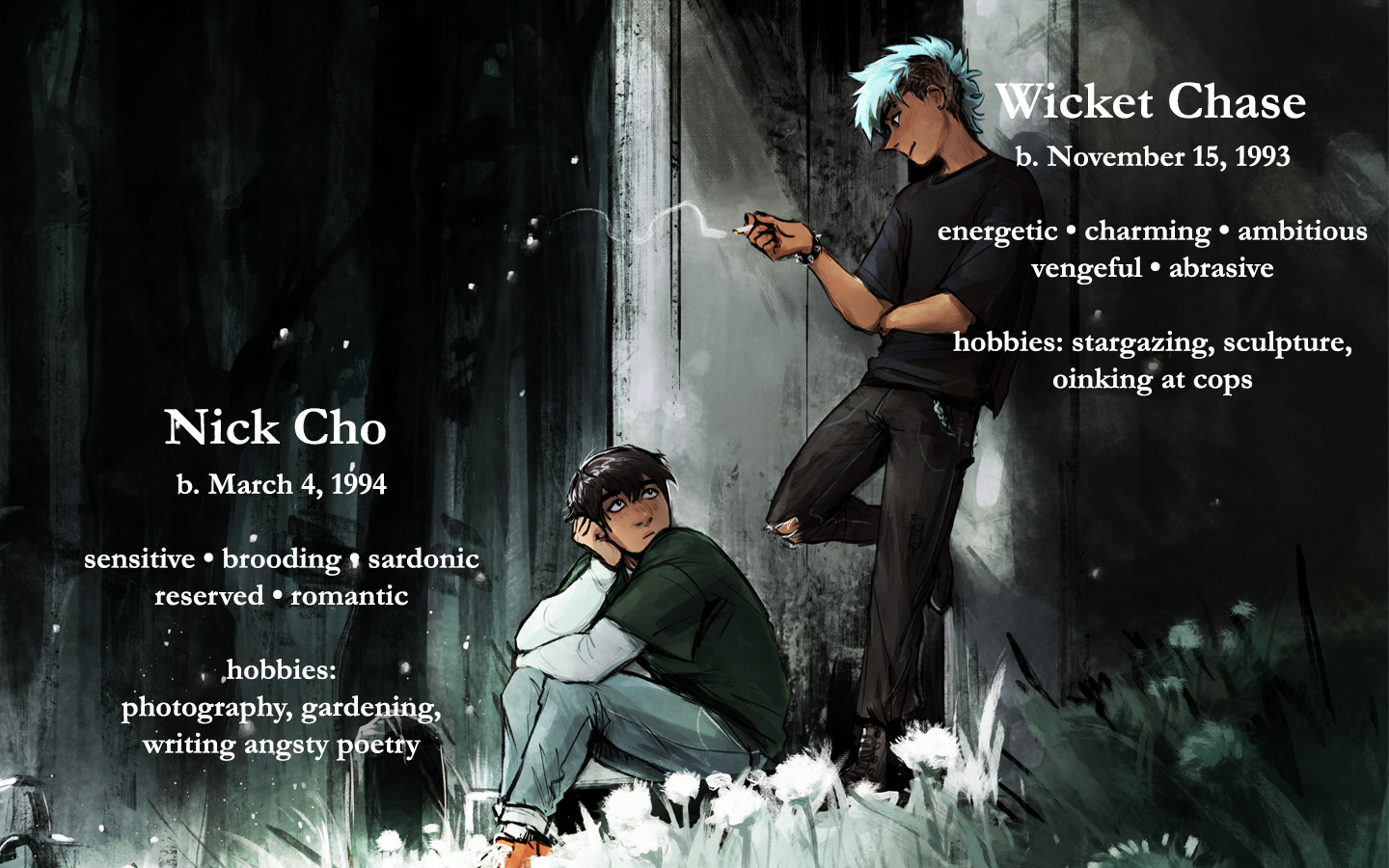
Inchcrow is a queer coming-of-age story with a supernatural spin, a graphic novel about the dangers of holding yourself back and how self-acceptance gives you the power to shape your own life. It is set in a semirealistic world where supernatural powers and queerness are similarly rare and stigmatized. As a result of their rarity, powers are not very well understood among the general population or scientific institutions alike.
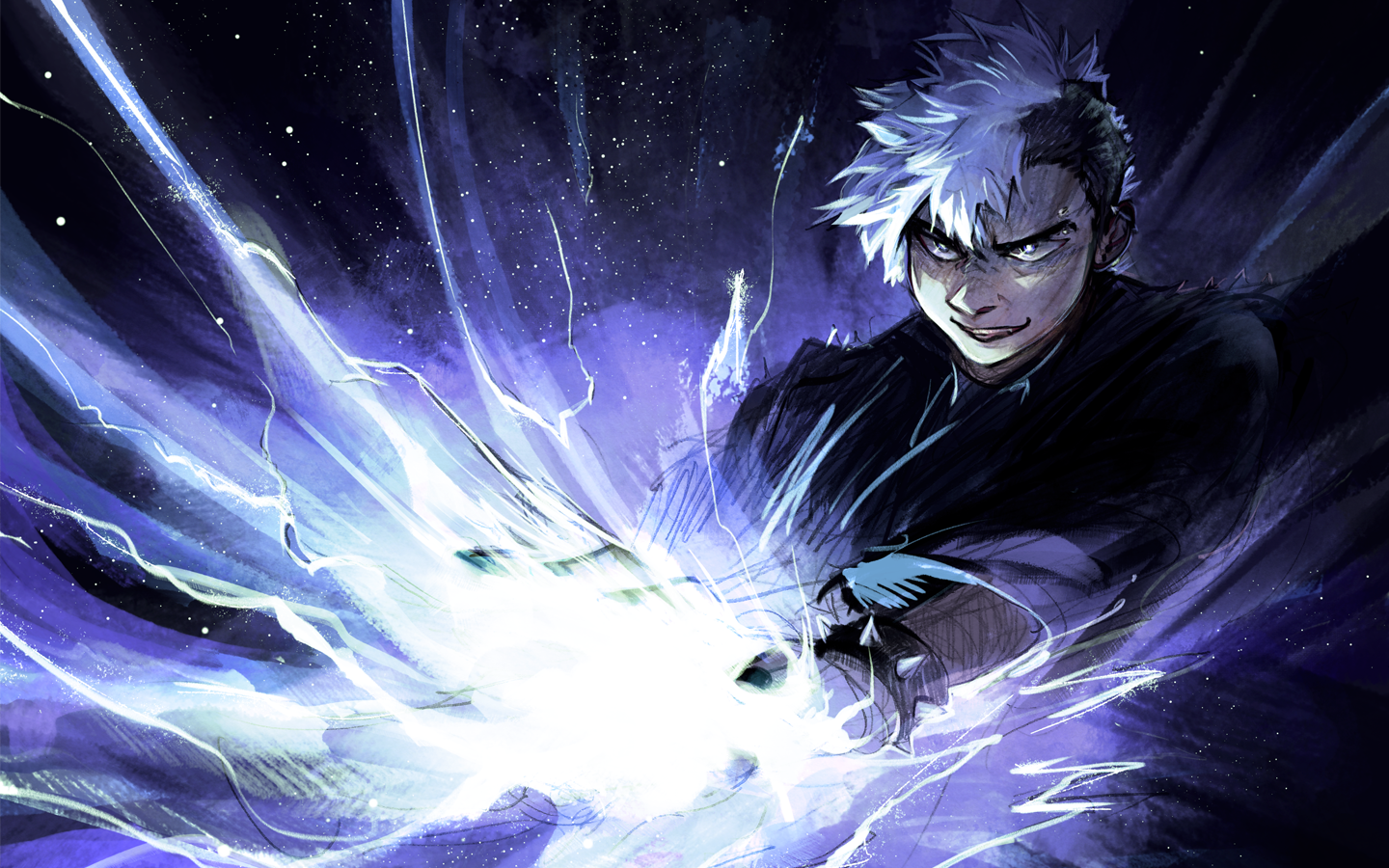
Powers in this story are limited to what is possible using the fundamental forces of physics. It is pushing, pulling, lifting, crushing, illuminating, burning, bursting. It is just fancy telekinesis. Mechanical forces require the least amount of strength to manipulate, then electromagnetic forces, then nuclear and gravitational forces. This order is inspired by the progressively higher energies at which these forces unify and become indistinguishable in physics. A lot of the visual language I use for powers is inspired by imagery from astronomy, particularly stars, galaxies, and comets, to complement their relation to concepts from physics.
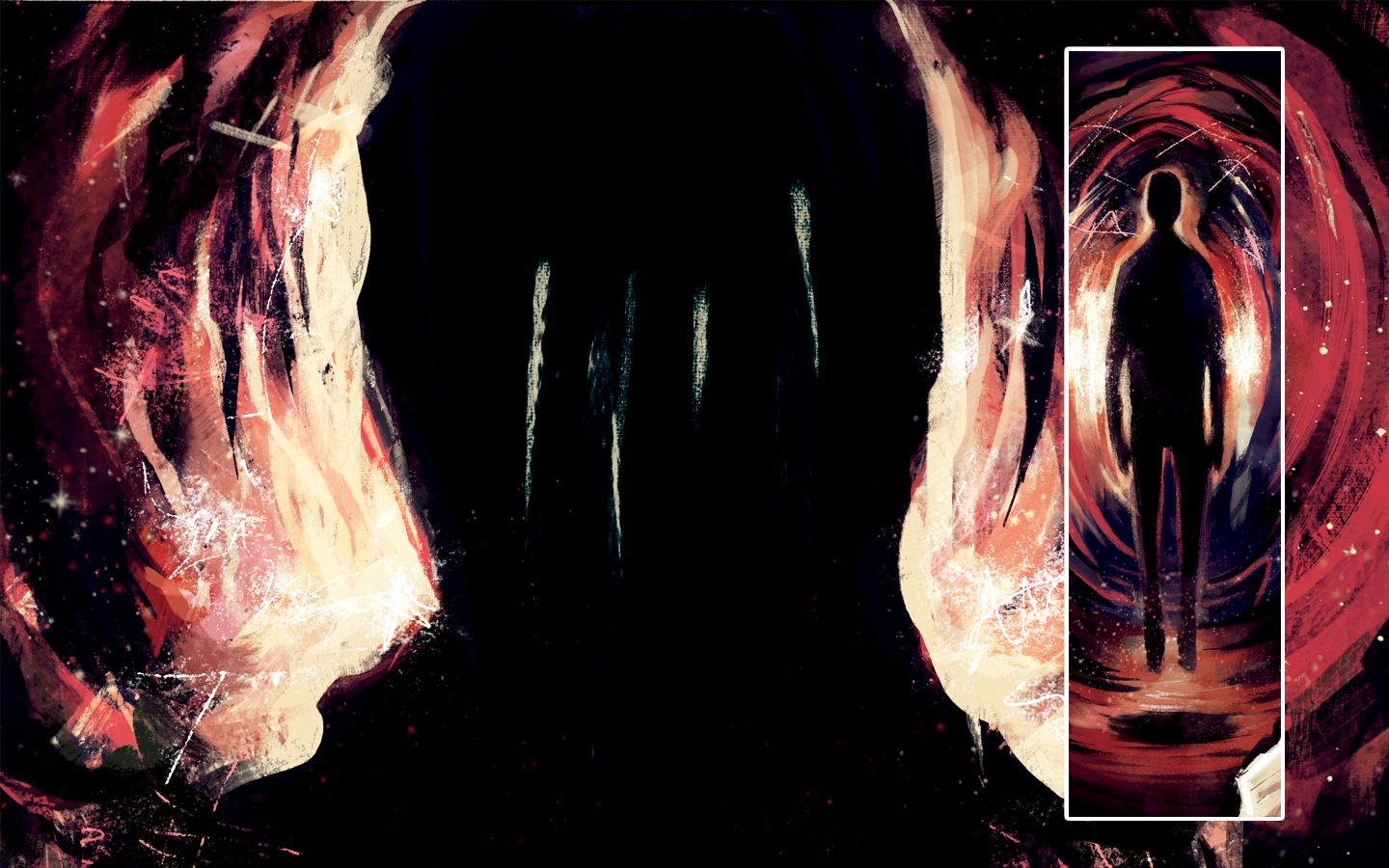
For my thesis, I chose to produce the seventh chapter of the story. A graphic novel pitch packet generally samples the first chapter of the story, but I wanted to challenge myself and make the most of the resources available to me as a thesis student. I already have a pretty good grasp on the story’s beginning, so I chose to work on a section I hadn’t developed much yet. This chapter also contains a larger diversity of scenes, emotional beats, environments, and character interactions than would be present in the first chapter. There is drama! Action! Bloody noses! A big sparkly smooch scene! Choosing this portion of the story enabled me to show off how good I am at drawing all this stuff.
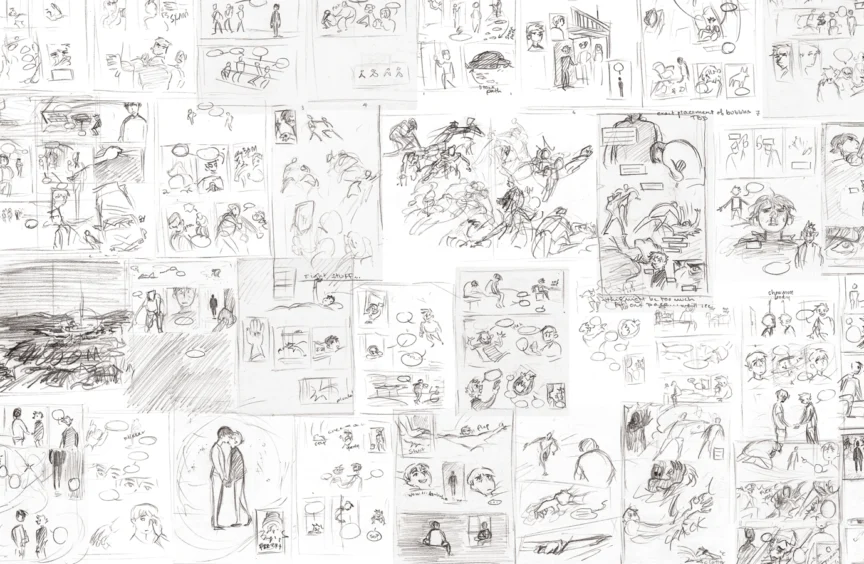
As a primarily self-taught digital painter relatively new to making narrative comics, my thesis project was as much about getting started on this story as it was about refining my process. I experimented with different digital brushes to create a workflow and visual style that felt both fun and appropriate for the story. I learned a lot of fundamentals and principles for page and panel composition, inking, lettering, and physical book production. My advisor and mentor were both very helpful in guiding me as a beginner while still expecting high quality work.
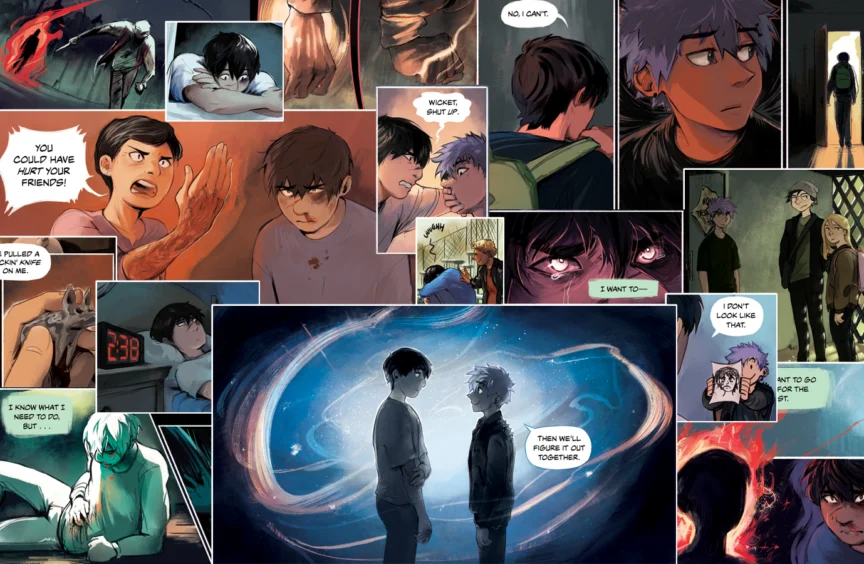
Inchcrow is inspired by the intense longing I first developed as a closeted queer teen for a world that didn’t exist, one without bigotry, one where I could easily be myself. The idea of having the power to make a new world has haunted me since. This story is in many ways a validation of my younger self’s rage and sadness and how hard he worked to shape his own life, to shape me. I hope it provides some catharsis for others who went through—or are going through—something similar.
I am continuing to publish Inchcrow as a webcomic hosted on its own site, with early page releases and behind-the-scenes content posted to my Patreon. This, along with my portfolio, can be found on my carrd, linked below.