It’s time to change your story. Shing did.
This month, we share stories from our students and alumni who put themselves first and changed their careers and creative paths. Whether it’s to pursue a different creative medium or finally leave their corporate jobs, these storytellers share how the MFA Visual Narrative at SVA catalyzed their change.
Applications for Summer 2026 remain open
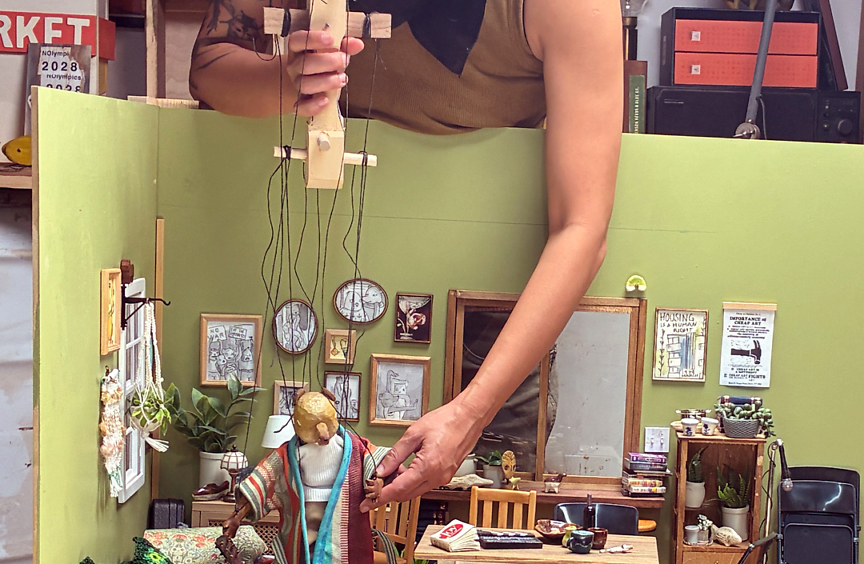
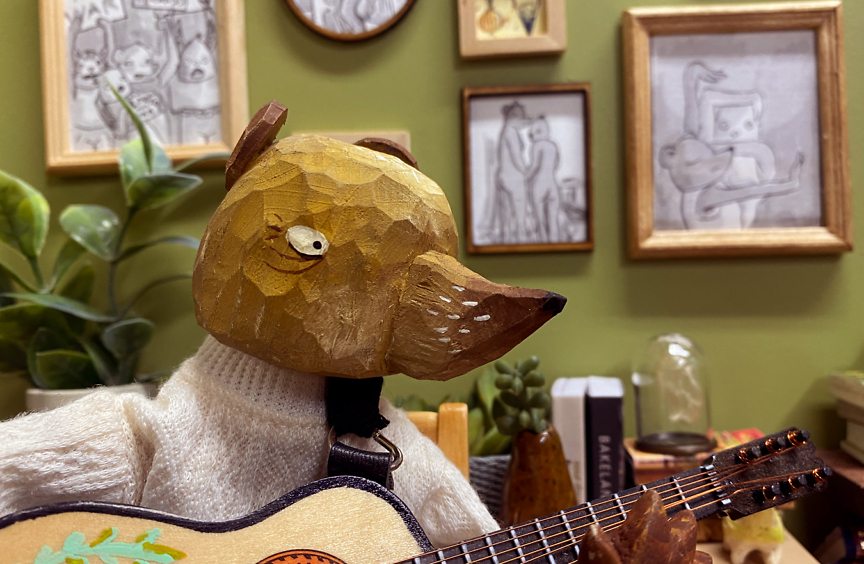
Meet graphic novelist and multidisciplinary artist Shing Yin Khor, Class of ‘26, who joined the program to refine their craft as a puppet filmmaker specializing in marionettes.
What was the catalyst to apply to MFAVN at your particular point in life?
I was really burnt out as a graphic novelist, but excited about other mediums I’d been working in, like game design and puppetry. MFAVN’s broad scope, and low-residency nature made it extremely appealing to me. While I am a multidisciplinary artist – for this program, I largely focused on being a puppet filmmaker specializing in marionettes, because I wanted to spend two years doing the most indulgent and non-commercially viable work I could!
(Also, the Educator Scholarship was crucial – I could not have attended without it.)
Is there a specific path or change you are looking for once you get the degree? What is it? Do you think you are on track? Or maybe it has changed?
I already teach as an adjunct professor, but I entered this program because I wanted to explore a more full-time academic path and needed a terminal degree. That said, I think being at MFAVN has actually made me less tied to that intention. – while I would still love to teach full time at a university, I am also more skeptical about the structures of academia, and perhaps more importantly, more confident and assured in my own worth and talent as an artist and educator and less likely to trade the freedom of directing my own career for the stability of full-time university academia.
How does your perspective on story and storytelling differ now in comparison to when you entered the program?
I think I care a lot less about medium now, and feel good about my ability to switch between whatever mediums serve the stories I want to tell the best. I have a lot of trust that my audience will find me, and I’m not afraid to make work that feels commercially unviable. If anything, the more a project has “no one asked for this” vibes, the more attracted I am to it.
I hope to continue my wildly multidisciplinary practice, but find a path where I can keep experimentation part of my process, and to continue making work that my brain and body loves.
Can you talk about being in NYC for the program and the influence it has had on you?
I love being in NYC, especially in the summer. I feel like New Yorkers really appreciate summers in the way that Los Angeles doesn’t know how to. I might even have developed a fondness for the chaos of the Lower East Side.
Not being in my home city also made the summers feel like a real residency experience, where I could focus and immerse myself in my work.
Tell us about the community you found while in MFAVN, and how the people you met here have made an impact on you then until now. Faculty can be mentioned here too.
I love my cohort! They are the people I feel I am learning the most from – being surrounded by such a diverse range of perspectives and backgrounds has been really revitalizing. Our Ludlow crew has been especially close, and our increasingly elaborate dinners together were definitely an inspiration for my thesis project. It has been really lovely to have an instant community away from home, and I deeply treasure the friendships I have made in this program.
I think I did some of my best work in Susanne Reece’s class, Story Visualized, which felt extremely adaptable to the cohort’s varying levels of experience and chosen artistic mediums but also let me do a lot of low-stakes experiments that eventually led to the artist collaborations and format I am doing for my thesis (which is a short film and puppet musical). I also love working with my thesis advisor Greg Pak and my mentor Husam Abed, who have allowed me to really deepen my focus and understanding of my chosen craft. Last semester, I did an independent study with faculty Stacy Morrison, which was extremely liberating to how I thought about process and gave me a lot of direction in how to evolve my history and research based work in ways that I think will be incredibly valuable as I continue to explore documentary forms of storytelling.
What kinds of work/art practice do you do now, and how has MFAVN influenced your career path?
Right after I graduate, I am going to finish the book that I joined MFAVN to procrastinate on (I am also much less burnt out now than when I started). That said, I hope to continue my wildly multidisciplinary practice, but find a path where I can keep experimentation part of my process, and to continue making work that my brain and body loves.
I think MFAVN has given me space to explore my craft, but more importantly, it has helped me hone my desires for my career and future. I want to maintain a high level of control over the work I make, and I want to make work at the intersection of highly skilled analog craft, and building community, and making the world a much more tolerable place to live in.
In a few words, what is the value of the program to you, professionally and personally?
Time, space, indulgence, experimentation, community.
Now it’s your turn. Change your story. Pursue what you’ve always wanted to!
Applications for Summer 2026 are Still Open!
Apply Now! Apply before February 15 to be considered for our second round deadline. Applications will remain open through May 1 while space, scholarships, and housing awards remain available.
Reach out to us at mfavn@sva.edu to learn more.